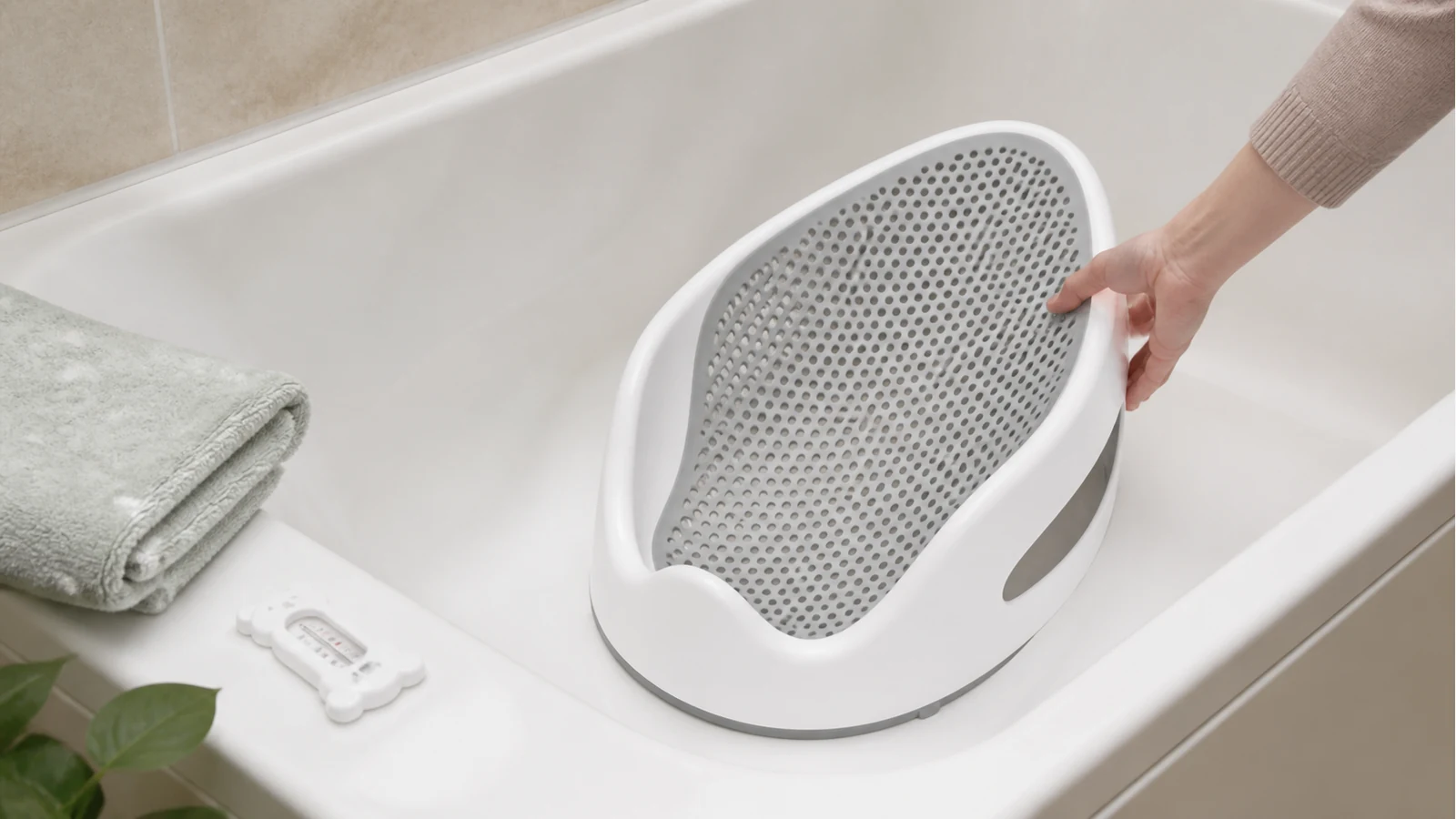
Bath Seat For 7 Month Old Uk
For a bath seat for 7 month old UK parents, the direct answer is: seven months is only a clue, not permission. A bath seat is worth considering only if your baby meets the product's sitting and size limits, the seat fits your exact bath surface, every fitting works, and an adult stays beside the bath within immediate reach. If any one of those fails, choose a different bathtime setup.
The safety line is firm. RoSPA baby bath seat guidance says bath seats are helpful aids, not safety devices, and that babies must stay within arm's reach. NHS baby and toddler safety guidance also states that bath seats do not remove the need to stay with the baby the whole time.
Diagnostic Ladder
- Baby readiness: Can your baby sit as the product requires, keep their head steady and remain within the seat shape without folding forward?
- Bath compatibility: Does the seat sit on the exact surface the maker allows, with no texture, curve, plug or mat interfering?
- Fitting check: Do suction cups, feet, bars and openings pass the dry test before water is run?
- Adult routine: Are towel, nappy, clothes and wash items already within reach before the baby is undressed?
- Exit rule: Do you know what behaviour or damage means the seat is no longer used?
Is Seven Months Old Enough?
Some seven-month-olds sit steadily and calmly. Others lean hard, slide forward, arch backwards or try to pull up on anything nearby. The calendar age matters less than posture and behaviour. If the instructions say the baby must sit unaided, do not treat a near-sitter as ready. If your baby technically sits but lunges, twists or pushes against the front, the seat may make the bath feel more controlled while actually creating a new trapping or tipping problem.
This is why a return window is useful. Test the empty seat in the empty bath first. Then test the whole adult routine without the baby: where your hand rests, where the towel sits, how you turn off taps, and how you lift the baby out. If the dry rehearsal feels awkward, water will not improve it.
Bath Seat or Full Baby Bath?
A seat insert can help when the adult bath is smooth, compatible and easy for you to reach. A full baby bath can be better when the adult bath is too deep, textured, curved, slippery or awkward for your back. A freestanding bath with its own support can also be relevant when you want the baby's bathing position to be independent of the adult bath surface. That is the conditional place where a same-site option such as /detail/superbebebe/ may belong: only after the bath-seat route fails on fit or posture, and only if the freestanding footprint works in your home.
What a Seat Cannot Do
It cannot prevent drowning. It cannot make answering the door safe. It cannot allow an older child to supervise. It cannot correct a bath surface that the fittings do not grip. It cannot restrain a determined climber. It also cannot make a deeper water level acceptable because the baby looks supported. The product is a positioning aid; the adult is still the safety system.
Who Should Not Buy One
Skip the bath seat if your baby cannot meet the product's entry rules, if your bath has a textured or curved base the manufacturer excludes, if fittings are missing or worn, or if the seat would tempt you to multitask. Also skip it if the problem is actually adult posture. In that case, changing the height, using a smaller freestanding bath or having another adult help may solve more than a suction seat in a low bath.
Stop Conditions
End the bath immediately if the seat lifts, slides, tips, makes a popping sound, or no longer feels fixed. End it if the baby slumps, coughs, becomes distressed, tries to climb, pushes sideways, or gets a leg caught. End it if you need to leave the room, answer the phone, help another child or fetch anything. Wrap the baby first; the bath can wait.
How to Rehearse Before the First Wet Use
Put the seat in the empty bath in daylight. Press or fit it exactly as the instructions say, then try to move it with the same kind of sideways force a wriggly baby might create. Do not add a towel, mat or improvised padding unless the manufacturer explicitly allows it. Next, sit where you will sit during the bath. Reach for the towel, nappy and clothes without taking your eyes off the seat. If you cannot do that smoothly while the bath is dry, the setup is not ready for a wet baby.
Then check the exit move. Many parents focus on getting the baby into a seat and forget the lift out, when skin is wet and the adult may be kneeling awkwardly. If the adult bath is too low, too deep or too far from your body, a seat may not solve the main problem. A smaller freestanding bath, another adult helping, or a shorter top-and-tail wash may be more realistic.
Trade-Offs at Seven Months
The advantage of a seat is position. The trade-off is another set of limits: fittings, openings, surfaces and a child who may suddenly learn to pull or twist. That trade-off can be fine for a calm sitter and a compatible bath. It is a poor trade if the seat is being bought after a scare, while everyone is tired, without checking the surface. Treat the purchase as a controlled setup change, not an emergency fix.
Bottom Line
A bath seat for a seven-month-old can be a practical aid for the right baby in the right bath. It is the wrong buy when age is the only reason. Work down the ladder: baby, bath, fittings, adult routine, exit rule. If all five pass, proceed cautiously. If not, choose a simpler or more stable setup.
When this check is not enough
Do not use a baby bath article as medical advice, a substitute for constant adult supervision, or a guarantee that one product size fits every baby, bathroom or caregiver.
When to stop and choose another setup
Stop and choose another setup or ask a qualified professional when the baby cannot be supported safely, the bath is unstable, water temperature is uncertain, the caregiver cannot keep one hand free, or any health concern is involved.
Completed Setup Template
Answered directly with practical fit checks, trade-offs and a clear proceed-or-stop rule.