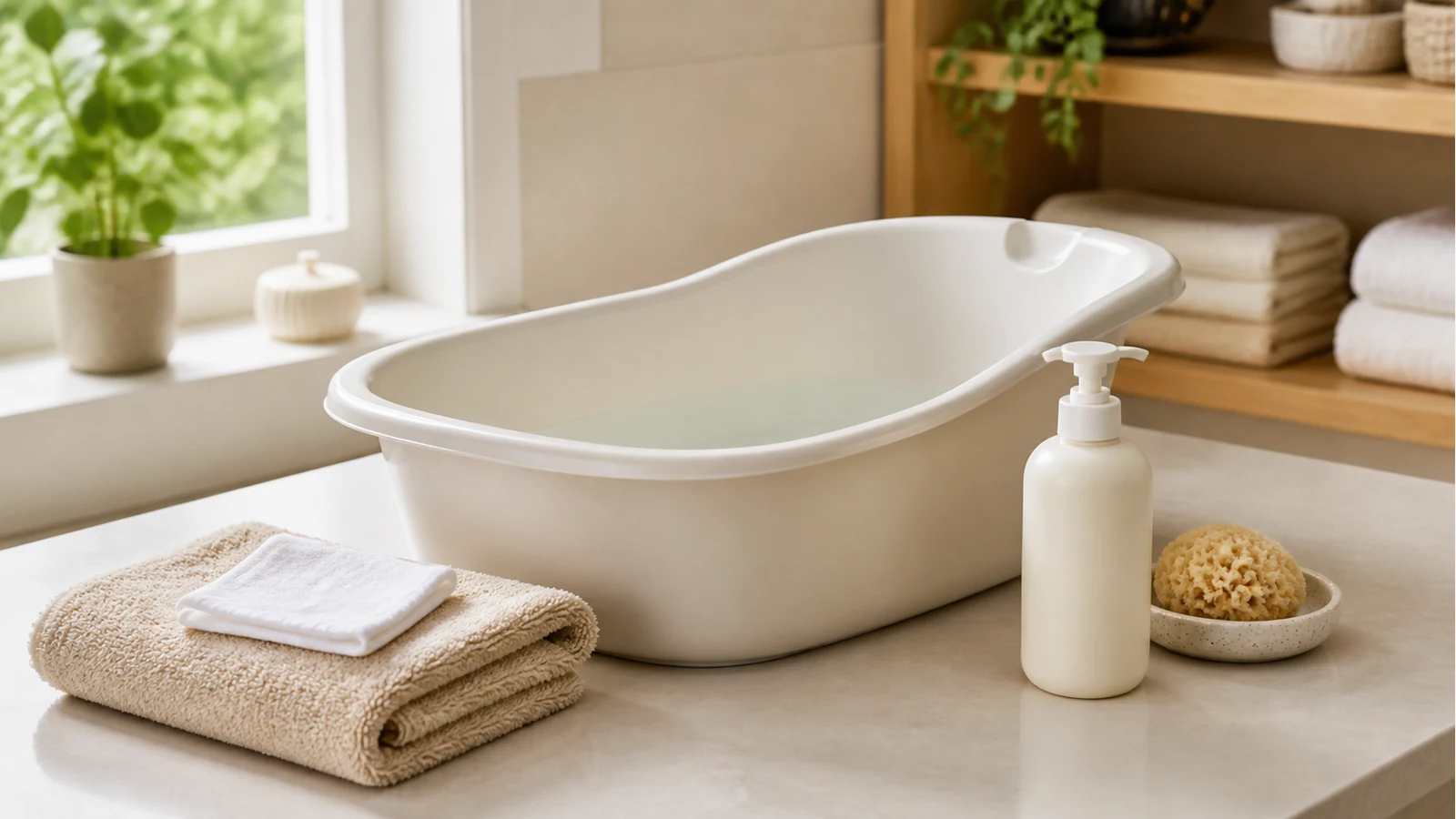
Best Baby Bath for Eczema UK: How to Choose Without Overclaiming
The best baby bath for eczema UK families is not a bath that claims to treat eczema. It is a stable, easy-to-clean setup that helps you keep washing short, lukewarm, low-friction and consistent with the advice you have been given by a pharmacist, GP, nurse or health visitor. The bath is a routine tool, not a medical treatment.
Start with public guidance. NHS baby bathing guidance advises plain water for a baby's skin in the first month and careful temperature checks. NHS emollient guidance explains that emollients can be used as soap substitutes and are best applied after washing or bathing when skin needs moisture. NICE atopic eczema guidance includes eczema-specific washing recommendations and advises against emollient bath additives for children with atopic eczema.
Eczema Bath Checklist
- Keep the room warm enough that the baby is not chilled before or after the bath.
- Use lukewarm water and check it before the baby goes in.
- Keep the routine calm and short rather than chasing a long soak.
- Use only products advised for your baby's skin; avoid fragrance and bubble bath unless a clinician says otherwise.
- Remember that emollients can make skin and surfaces slippery.
- Pat dry, especially in skin folds, and apply prescribed or recommended products as directed.
- Clean and dry the bath surface so residue does not build up.
Which Bath Features Help?
Look for stability first. A bath that wobbles, slides or makes the adult rush is a poor eczema bath even if it is marketed as gentle. Then look for a shape that keeps the baby comfortably supported while you wash without scrubbing. A smooth, accessible interior matters because emollient residue can make cleaning more important. A clear water level marker can help tired parents avoid guessing, but it does not replace checking the water and watching the baby.
Depth is a trade-off. Parents sometimes search for a deep baby bath for soaking eczema because they want more skin in contact with water. That may sound logical, but eczema care should follow professional advice. More water also changes handling, lifting and drowning risk. If your clinician has given specific washing instructions, choose a bath that lets you follow those instructions safely; avoid unsupported a deeper routine because a product is larger.
Can a Baby Bath Help Eczema?
It can help the routine around eczema: fewer spills, less adult panic, a predictable place for towels and creams, and a calmer wash. It cannot cure eczema, replace emollients, diagnose a rash, or solve infection. If your baby scratches until the skin breaks, seems unwell, has spreading redness, oozing, swelling, fever or severe discomfort, the next step is clinical advice, not a new tub.
A freestanding bath such as the same-site /detail/superbebebe/ route may be relevant when you specifically need a larger stable tub and fitted seat arrangement to make washing manageable. Keep that CTA conditional: it is for families whose space and routine fit the product, not for every eczema searcher.
Who Should Not Upgrade for Eczema Alone
Do not buy a new bath if your current setup is stable, easy to clean and lets you follow the advice you already have. Do not buy because a product page implies sensitive-skin benefits without explaining the routine. Do not buy if the larger bath would make you carry heavy water, use deeper water than needed or store a damp tub where mould could develop.
Stop Conditions
Stop the bath if the baby becomes unusually distressed, cold, floppy, very red, wheezy or unwell. Stop if the water is hotter than intended, if emollient residue makes your grip or the floor slippery, or if you cannot keep one adult focused on the baby. Stop using any product that cracks, smells musty, cannot be cleaned properly or encourages longer baths than your skin-care plan allows.
How to Keep the Routine Low-Friction
Prepare the room before the baby is undressed. Put the towel open, keep any recommended emollient or soap substitute within reach, and remove anything perfumed or unnecessary from the bath area. If your baby scratches when waiting, keep waiting time short. If your hands become slippery, pause and reset your grip before continuing. The best bath shape is the one that lets the adult move slowly and predictably.
After the bath, the drying stage matters as much as the washing stage. Pat rather than rub, pay attention to skin folds, and apply products in the order your clinician or pharmacist has advised. Clean the bath afterwards so oily residue does not remain for the next user. This is not glamorous, but it is what makes the equipment useful.
What Not to Let the Product Decide
Do not let a deep tub decide that your baby needs a long soak. Do not let a fitted seat decide that your hands are no longer needed. Do not let a premium product page decide which skincare products belong in the water. Those decisions belong to the baby's symptoms, your healthcare advice and the safety of the room on that day.
If eczema is mild and already well managed, a new bath may simply be a convenience choice. If eczema is worsening, weeping, painful or disturbing sleep, the product decision should move behind the health decision. In that situation, write down what happens during and after bathing and take that pattern to a pharmacist, GP, nurse or health visitor.
Bottom Line
For eczema, choose the bath that makes the right routine easier. Stable surface, lukewarm water, short wash, gentle products, careful drying and timely emollient use matter more than premium language. When symptoms escalate, the correct upgrade is professional advice.
When this check is not enough
Do not use a baby bath article as medical advice, a substitute for constant adult supervision, or a guarantee that one product size fits every baby, bathroom or caregiver.
When to stop and choose another setup
Stop and choose another setup or ask a qualified professional when the baby cannot be supported safely, the bath is unstable, water temperature is uncertain, the caregiver cannot keep one hand free, or any health concern is involved.