Big Baby Bath for Two Children UK: When Sibling Bathtime Is Sensible
A big baby bath for two children UK households can make the evening routine feel simpler, but it is sensible only when the adult can supervise both children closely, the older child is calm, the younger child is correctly supported and the water stays shallow. A bigger bath is a logistics tool, not permission to relax the supervision rule.
The NHS is clear that an older brother or sister does not replace adult supervision in the bath: NHS baby and toddler safety guidance. RoSPA also warns that bath seats are not safety devices and that babies should remain within arm's reach: RoSPA baby bath seat guidance.
Sibling Bathtime Checklist
- Decide in advance which child comes out first.
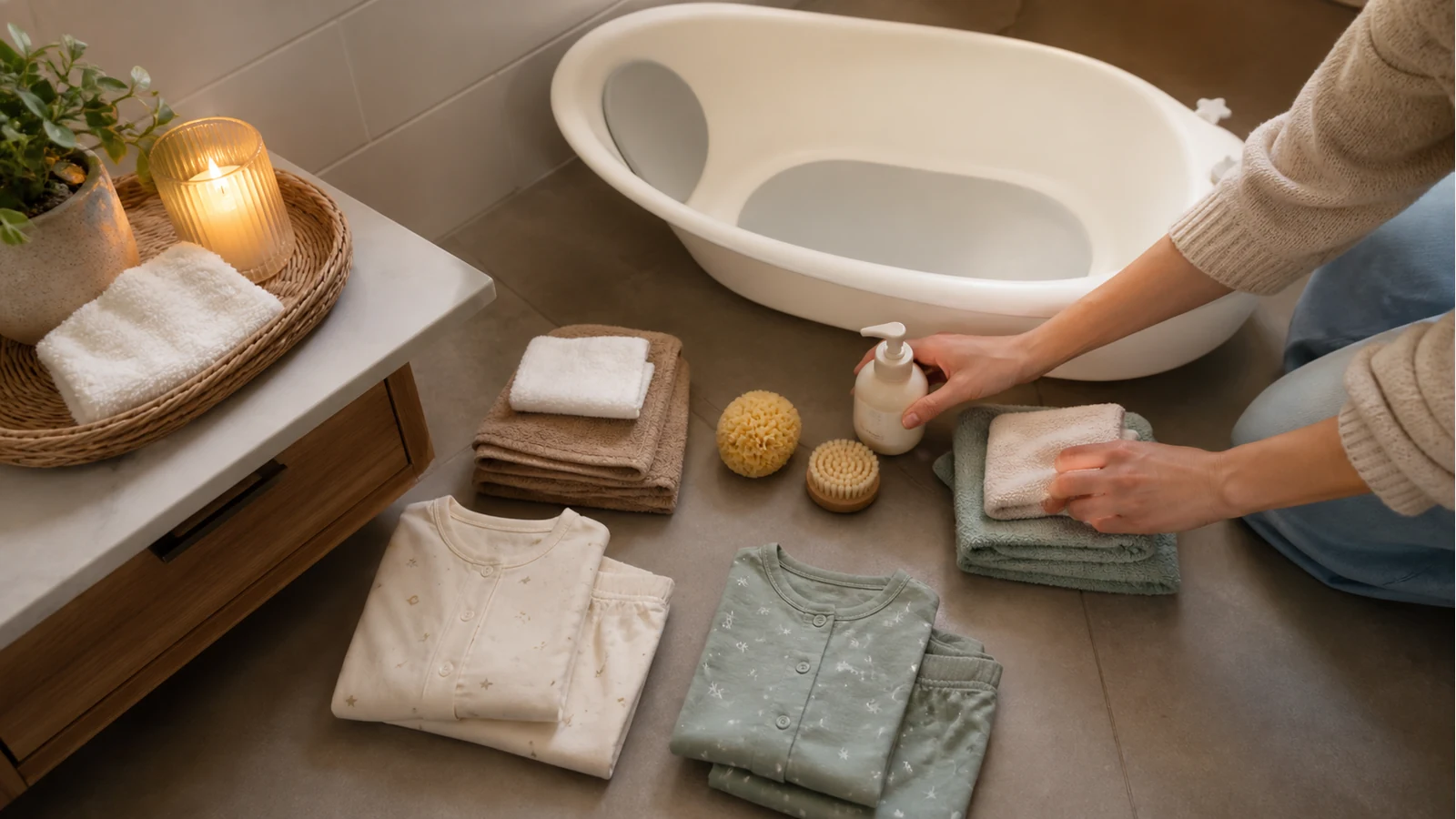
- Put two towels, two nappies or pants and two sets of pyjamas within reach.
- Keep water shallow and check temperature before either child enters.
- Keep the baby positioned according to the bath or support instructions.
- Give the toddler a calm job, not splashy toys that dominate the space.
- Stay within reach; do not leave the older child in charge for even a moment.
- End the bath early if either child changes the risk level.
When a Big Bath Helps
It can help when the baby is old enough for the intended support, the toddler follows simple instructions, and the adult can sit or kneel where both faces, hands and body positions are visible. It can also help where an adult bath is too large, too slippery or too low for a single caregiver managing two children. The value is a more contained routine: fewer transfers, less water, and a predictable station.
It does not help when the toddler is in a throwing, climbing or jumping phase. It does not help when the baby still needs a newborn hold that occupies both of the adult's hands. It does not help if the adult is already exhausted and trying to use bathtime as a way to multitask. Shared bathtime works best when it is deliberately short and boring.
One Bath, Two Baths or Staggered?
Use one shared bath only when both children's needs are compatible. Use two separate baths when the baby needs a quiet wash and the toddler wants play. Use staggered washing when bedtime timing matters more than water saving: wash the toddler first while the baby is elsewhere with another adult, or wash the baby first and let the toddler have a short bath afterwards. The fastest routine is the one you can repeat without negotiating every minute.
A same-site freestanding option such as /detail/superbebebe/ may fit families who want a contained larger baby bath and have checked the space. It should be introduced only under those conditions. The product is not a promise that two children can share safely in every household.
Who Should Not Combine Bathtime
Do not combine bathtime if the older child cannot follow stop instructions, if the baby startles easily, if either child is ill or overtired, or if you cannot stay physically close enough to lift the baby immediately. Do not combine it in order to answer messages, tidy the bathroom or leave the room for pyjamas. Do not combine it if the bath becomes a wrestling arena.
Stop Conditions
Both children come out if the toddler stands, jumps, pours water over the baby, blocks your access or ignores a stop instruction. End it if the baby slumps, coughs, cries hard, tries to climb or loses position. End it if the doorbell rings, the phone rings, another child calls, or the adult's attention is split. Wrap first, solve the interruption second.
One-Adult Routine
With one adult, keep the bath short and give each child a fixed role. The toddler enters only when the baby station is ready, or the baby enters only when the toddler is settled and calm. Do not start with both children undressed and then organise supplies. Put the baby nearest the adult's stronger hand and keep the toddler's toys minimal. The goal is not entertainment; it is a controlled wash with a clear exit.
Two-Adult Routine
With two adults, the routine can be more relaxed, but roles still help. One adult watches the baby and one handles the toddler, towels and pyjamas. If one adult leaves, the routine changes immediately to a one-adult routine or ends. The mistake is assuming that because two adults started the bath, shared attention will remain available. It often does not.
Trade-Offs for a Big Bath
The upside is fewer stations and less repeated filling. The downside is that both children can influence each other's behaviour. A toddler who splashes may make the baby cry; a baby who cries may make the toddler climb out. If the bath is so large that the adult has to lean or crawl around it, it has failed the purpose. The right large bath makes reach easier, not more theatrical.
If the routine needs constant bargaining, split it. A predictable five-minute solo bath usually beats a shared bath that becomes noisy, rushed and harder to exit safely.
Bottom Line
A big baby bath can support sibling logistics when the family already has a calm, supervised routine. If the goal is to control chaos, the better answer may be two shorter baths. Choose the setup that keeps the adult in charge of the water, the timing and the exit.
When this check is not enough
Do not use a baby bath article as medical advice, a substitute for constant adult supervision, or a guarantee that one product size fits every baby, bathroom or caregiver.
When to stop and choose another setup
Stop and choose another setup or ask a qualified professional when the baby cannot be supported safely, the bath is unstable, water temperature is uncertain, the caregiver cannot keep one hand free, or any health concern is involved.