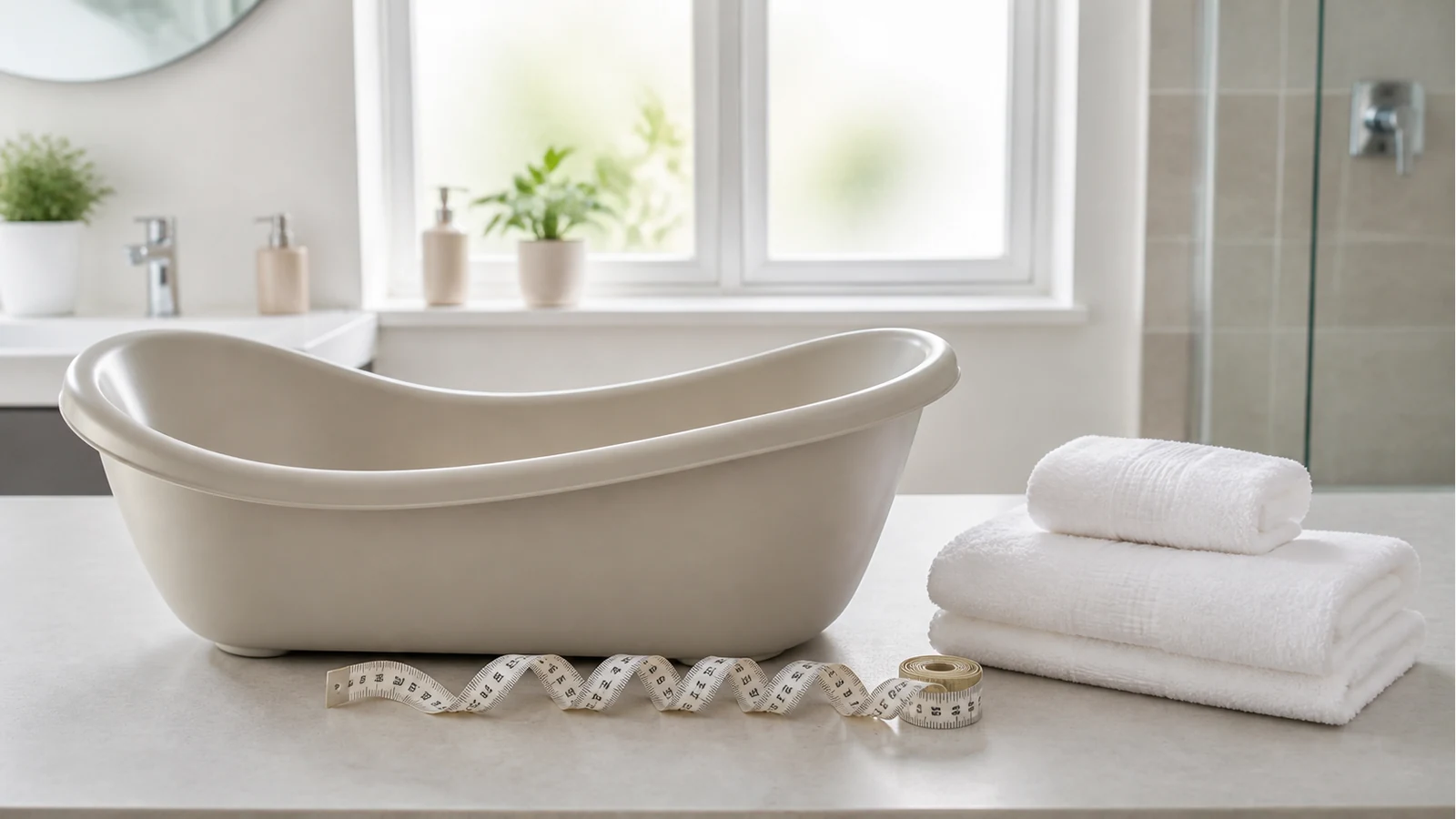
What Size Baby Bath Should I Buy for a Newborn? A UK Parent's Decision Guide
If you are asking what size baby bath should I buy for a newborn, the practical answer is: buy the smallest stable setup that lets you hold the baby securely, keep water shallow, work at a comfortable height and store the bath without turning bathtime into a daily obstacle. Bigger is not automatically safer. A sink, clean washing-up bowl or compact baby bath can be enough at first; a larger freestanding bath only makes sense when it solves a real home constraint or you want a longer use window and have the floor space to manage it.
The NHS says a baby bath, clean washing-up bowl or sink can all be used for a first bath, and advises preparing everything first, using shallow water and never leaving the baby alone: NHS baby bathing guidance. The same decision has a safety limit: NHS baby and toddler safety guidance explains that babies can drown in very shallow water and that an adult must stay with them.
The Size Decision in Plain English
Parents often start by asking for litres, centimetres or an age range. Those details help, but they are not the whole decision. A bath that looks generous in a product photo may be awkward if you cannot fill it near where it will be used. A compact bath may be perfect for the first months but frustrating if your baby grows quickly or likes to kick. A folding bath may fit a flat, but only if you have somewhere to dry it fully. The right size is the one that matches the baby, the adult doing the washing and the home around them.
Use this order: first, choose a stable location; second, decide whether the adult can reach and lift safely; third, check where the water comes from and goes; fourth, consider how long you want the bath to last. That sequence keeps the buying decision human. It also prevents the common mistake of choosing a product around a marketing promise while ignoring the room it has to live in.
Decision Table
| Home situation | Likely sensible starting size | Main advantage | Main compromise |
|---|---|---|---|
| Newborn first weeks, normal sink access | Sink, clean bowl or compact baby bath | Low water, close control, easy setup | Shorter use window and less room for kicking |
| Small flat with limited storage | Compact or folding bath | Easier to store and move | Must dry and store properly; may not suit long use |
| Parent wants one bath to last longer | Larger freestanding baby bath | More room as baby grows | Needs more flat space, water handling and storage |
| Adult has back, knee or recovery pain | Bath that can be used on a stable approved-height surface | Less bending when done correctly | Surface stability and lifting water become critical |
For a compact example, Shnuggle describes its baby bath as suitable from birth to around 12 months plus and designed to work with a small amount of water: Shnuggle baby bath product information. For a folding example, Stokke describes the Flexi Bath as a compact foldable bath and notes that it must be dried completely before folding and storing: Stokke Flexi Bath information. These are useful comparison points, not instructions to buy either product.
What to Measure Before You Buy
Measure the place where the bath will actually sit, not just the cupboard where it will be stored. You need a flat stable footprint, space for your knees or standing position, a towel within reach, and a route to empty water without carrying a heavy full tub across a slippery floor. If you plan to use a worktop-height surface, check that the surface is stable, dry, uncluttered and not near hot appliances or trailing cords. If you plan to use the bathroom floor, check whether you can kneel, lift and dry the baby without twisting.
Also measure your tolerance for daily friction. A bath that has to be fetched from behind five other items may stop being used. A large bath that is lovely for play but hard to empty may create stress on busy nights. A smaller bath that takes two minutes to set up may be the better product for a newborn even if it will not last as long.
Is a Larger Freestanding Bath Worth It?
A larger freestanding bath is worth considering when you have no adult bath, when the baby has outgrown a tiny newborn tub, when a caregiver needs a more predictable position, or when you deliberately want fewer replacement purchases. It is not worth it just because bigger sounds more premium. A larger tub still needs shallow, carefully checked water and constant adult attention. It can give more room and a longer use window, but it also asks for more storage, more water management and more planning.
For SUPERBEBEBE specifically, the verified same-site product route is available at /detail/superbebebe/. Treat it as relevant only if you want a freestanding baby bath with a fitted non-slip seat and have already checked space, surface and draining. Do not use a product page as a substitute for the safety routine.
Who Should Not Buy or Upgrade Yet
Do not buy a large bath if your sink or clean bowl is working well, your baby is calm, and the only reason is checklist anxiety. Do not upgrade if you cannot name where the bath will sit, where the water will come from, how it will drain and where it will dry. Do not buy any bath because it appears to make supervision less important. It does not.
Stop Conditions
Stop using the setup if the bath rocks, slides, flexes unexpectedly, overhangs a surface, needs to be lifted while full, or makes you step away from the baby to reach a towel, nappy or plug. Stop when the baby tries to climb, stand, twist out of support or no longer fits the intended position. If the adult cannot maintain a steady hold because of pain, tiredness or layout, change the routine before the next bath.
A Simple Buying Order
If two sizes both look possible, choose by the order of daily use rather than by the product name. The first question is whether the baby can be lowered in and lifted out without the adult twisting. The second is whether the water can be kept shallow and checked before the baby enters. The third is whether the bath can dry in the open after use. Only after those three pass should you think about longer-term value. This keeps the decision grounded in the evening routine, where most mistakes happen.
For gift buyers, ask the parents about flat surface, storage and whether they already plan to use a sink or adult bath. A surprise large bath can be generous, but it can also create a bulky problem in a small home. The better gift is the one that fits the actual bathroom.
Bottom Line
For a newborn, size should follow the routine. Start with the safest small setup that works in your home. Move larger only when the baby, the caregiver and the room genuinely need it. That is a calmer decision than chasing the biggest tub or the longest age range on the box.
When this check is not enough
Do not use a baby bath article as medical advice, a substitute for constant adult supervision, or a guarantee that one product size fits every baby, bathroom or caregiver.
When to stop and choose another setup
Stop and choose another setup or ask a qualified professional when the baby cannot be supported safely, the bath is unstable, water temperature is uncertain, the caregiver cannot keep one hand free, or any health concern is involved.